.jpg)



We are leaving the era in which all code was hard to write, but distribution was relatively easy, and entering a new era of "Hard Mode" fundamentals. Here is the candid truth about the trap of accessibility, and why the rules of business haven't really changed all that much - they just got 10x more extreme.
Part I: The illusion of access
The trap starts here. The advantages of the Foundation Layer are so overwhelming that they act as a gravitational pull, convincing founders that access to intelligence is the same as having a real product.
1. The "senior talent" API
When you plug into GPT-5 or Claude, you aren't just buying software; you are renting talent. You are effectively hiring a polymath - a coder, a linguist, and a reasoning agent - for pennies per request. This allows two engineers to skip (some of) the "hiring hell" of the early days and replicate features that used to require a PhD research team.
2. Zero CapEx velocity
In the old AI world, you needed server farms (which it clearly still is when building the foundation layer). However today, if building in the Application Layer, your "R&D" budget is a credit card linked to an API. You can pivot your entire product strategy in an afternoon without writing off millions in sunk costs.
3. Solving the "blank page" problem
Foundation models solve the "cold start" problem instantly. Anyone who posts written content knows how a ‘writers block’ can much more easily be unblocked. And that is the same with ideation, writing your first lines of code and so on. However, we also know that even though you can get started more easily, the quality might suffer if you’re not very careful. Additionally, since you can start many more things so easily, the risk of de-focus is much higher.
The trap: Because these advantages are available to everyone, not just people that can code, not just people that have access to capital, not just people that have the creativity to come up with novel ideas), they confer zero competitive advantage. They are table stakes, not moats.
Part II: The ‘extreme’ reality
Because the barriers to entry (Part I) have ‘collapsed’, the barriers to success have skyrocketed. The fundamental pillars of business - Distribution, Competition, Capital, Product, Execution, Pricing - have shifted from linear to exponential difficulty. Here is why you need to be 10x better just to survive.
1. Competition: everyone is a builder
Many more people are building as getting ‘a product’ live - using products like OpenClaw, Lovable or Cursor - is quite easy, and many believe they should be on the ‘AI train’ and capture the perceived value. More people than ever before, venture into building mode, full time or as side projects.
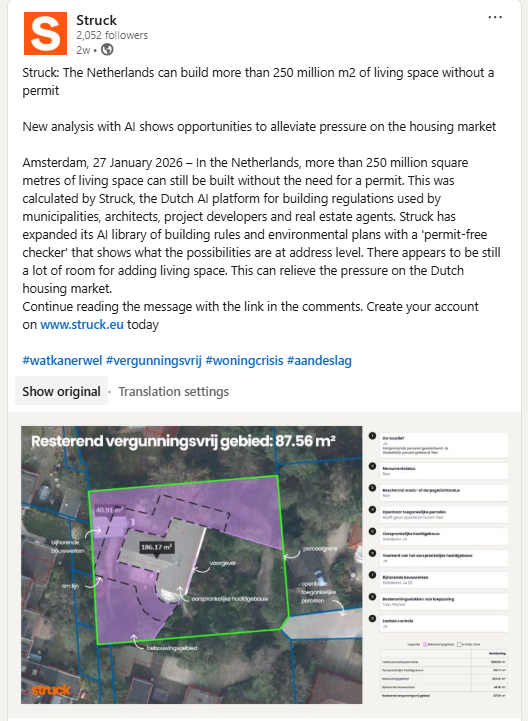
Furthermore, in the early SaaS era, startups disrupted enterprises because they were often incompetent at building software. That era is over. Your potential enterprise customer can now spin up an internal team to build and they can do this quickly, and fit for purpose. This risk is especially high when you're charging per seat, and your organization needs many seats (think customer care). The business case to split up a small team and replace the SaaS product is then easily justified. As it is easier and less time consuming now to lay code, companies are putting together products that replace external software or that they would have bought externally. These self-made products should really nail their personal problems, and not address it for 60-80%, because it’s built for multiple companies with slightly different demands. No concessions needed any longer, and margins can be saved on top.
Additionally, the blue chips of today are often tech savvy, which was not always the case 10 years ago, and most definitely not 20 years ago. Today’s blue chips are still very agile and innovative (the most innovative?) companies. Some of the Mag7 have (indirectly) built the foundation models and often compete directly with or feature startups. It is crucial to have a good feeling of where these companies and their products are migrating towards.
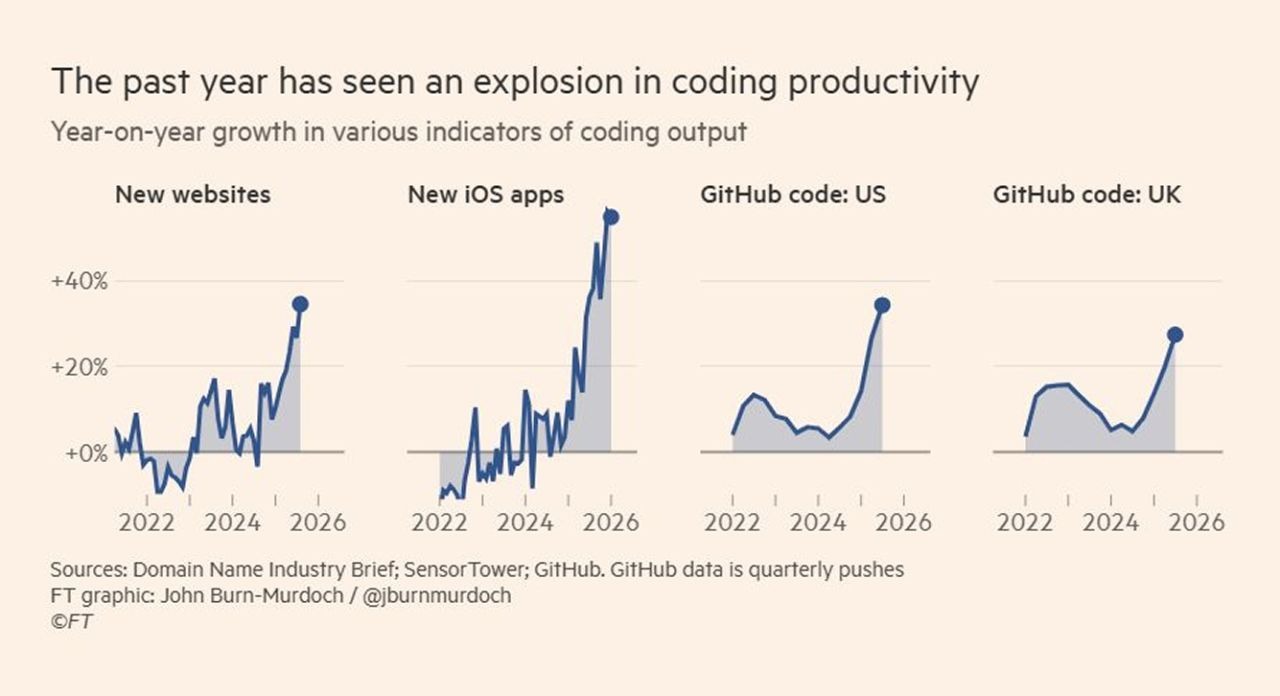
The pain: You aren't just competing with more startups and side projects, you are competing with your customers, with blue chips and the Mag7. And not all competition will be visible to you.
The solution: You need to be a truly AI-first organization. AI is not a "tool", but it is the foundational architecture of your company. In an AI-first world, you need to master a vast number of (sometimes complex) AI systems in conjunction, and - in this way - avoid getting many people on the payroll (think the ‘one-person-unicorn’).
Your design should bend to the technology. If a new model makes a whole department’s workflow obsolete overnight, your team must be comfortable dissolving that department and moving to the next high-leverage frontier.
Anything in your organization that creates "latency" is poison to your growth. Fewer people - or flat organizations - are faster, especially now that AI can pick up a task now and there’s no need to wait for a human. So, look for people who aren't afraid that AI can code or write, people that will be delegating the "doing" to agentic systems, so they can spend 100% of their day on the day-to-day tactics and longer term strategy. Today, most companies that raise a solid Series A are in the low double digits in workforce numbers.
Large companies look for peace of mind and customization, so another possible model is the Palantir model. You build a deep and crucial product, which is intrinsically almost impossible to ‘featurize’, and then forward deploy engineers that aren't just "support", but rather temporary CTOs for a specific project.
2. Distribution: the great filter (intelligence < reach)
The weaponization of distribution is now even more pronounced than it has ever been. In the past, "the best product wins." Today, that might not be enough. You also need "the best path to the customer".
For startups, things like PLG and ‘sales motion’ have always been crucial, but even giants can have a hard time when your distribution is not as good as your competitors’ and your product is not miles better. For years, OpenAI had the superior model. But as Google turned on its distribution hose (Android, Workspace), Google search with Gemini on top, and upped their AI stack, the dynamic shifted.
The pain: People, and business alike, are used to tech products now, and are shifting quickly to slightly better, slightly newer alternatives, or slightly cheaper alternatives (i.e. are not as loyal as we once thought) (See 3. UX/UI and customer behavior). The Morgan Stanley SaaS Index seems to indicate this too (the ‘SaaS -Pocalypse’).
The idea that you can price per seat (See 6. Pricing) when outcomes per seat are unsure and the perceived lock-in turns out to be an illusion in the age of AI, for anything that is ultimately not critical enough to a customer.
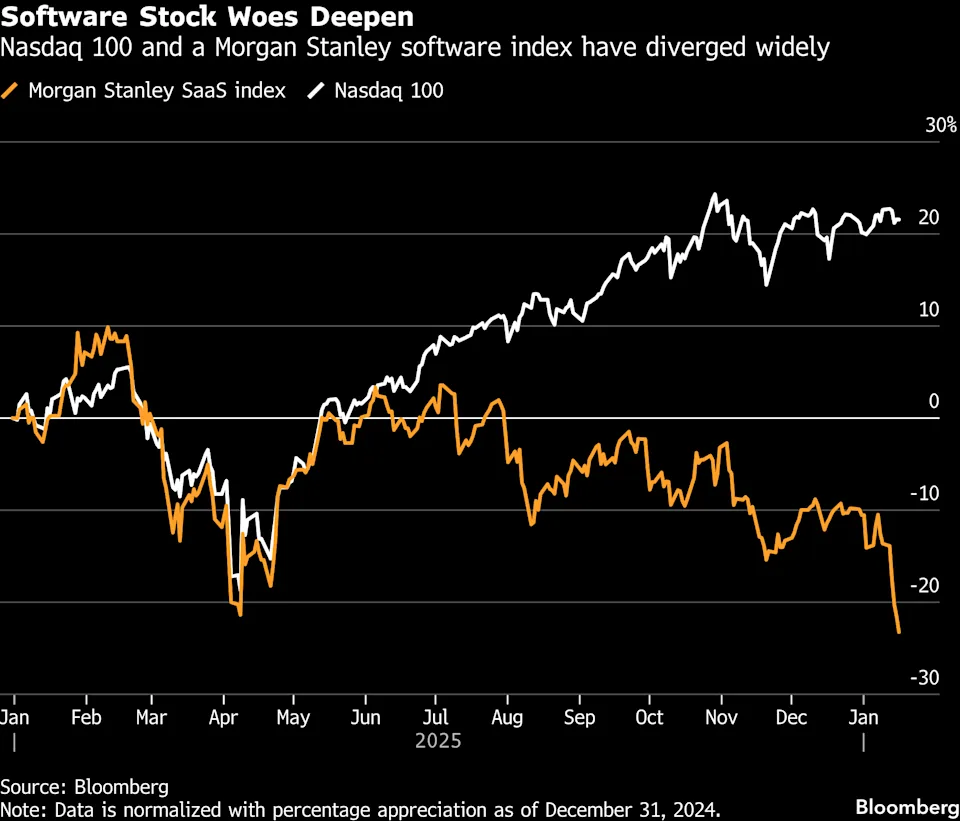
Critical infrastructure will not be replaced as ‘outsourcing tech’ to dominant players will still be preferred. Focus on increasing revenue is often more important than saving some costs. Additionally, outsourcing responsibility is a buying factor, much like “noone got fired for hiring Goldman’.
You need an aggressive and sophisticated outbound motion and viral PLG because you cannot afford to buy every user via ads when Big Tech gets them for free.
The solution: Move away from the good old PLG (yes, your product still needs to be top notch) to Agent-Led Growth (ALG), where possible. ALG marks the end of "aesthetic marketing" and the beginning of "objective utility," as the primary decision-maker transitions from a cognitively limited human to an AI agent with infinite bandwidth.
While PLG relied on "cool" websites to capture human attention, ALG leverages agents that bypass superficial branding to programmatically select tools based on a deep-scan of documentation, performance data, and technical fit. For startups, this means your most critical "customer" is no longer the human browsing your landing page, but the agent auditing your API; winning now requires optimizing for agent-readability and technical excellence over traditional brand hype. On the way there, human LLM adoption will increase CAC. Companies like Peec AI can help you optimize.
More tactically, on the GTM side, founders must transition from volume-based automation to high-fidelity AI orchestration by leveraging four tactical pillars: examples include, mapping "social capital" to replace cold outbound with AI-identified warm introductions, deploying AI research engines that analyze deep data to find genuine reasons for outreach (not the standard ‘we are 10x better or more efficient’).
Also, employing autonomous agents to run as many parallel channel experiments as possible in a very short timeframe and make it proactive by using OpenClaw.
3. Product, UX/UI and customer behavior
Tech is - partially - being democratized, and now ‘everyone’ is a builder (See 1. Competition: everyone is a builder).This implies that product differentiation will be much harder. Because, how can your product be so much better or different if you're using the same foundation as everyone else?
The pain: How to stand out in a world in which ‘everyone’ can build what you can build? CAC will increase as a result of this and the increased number of (improved) offerings (See 1. Competition: everyone is a builder), and so will churn.
On top of this user behavior and expectations are changing faster than ever. You need to be living up to the new ways people use products. Or better yet, how people will use products. Obviously we do not exactly know today how behaviour will change.
The solution: We do know that if a product is not much better, and the alternative is just a little cheaper (e.g. because it is bundled in a price of Google or OpenAI), or fits a workflow slightly better, customers will shift immediately today.
We also know the things history teaches us. Harvard Innovation Labs shows tech is replacing clutter and the actual work done becomes invisible (mediums disappear), here. Less is more, works. We know users are creatures of habits and will inevitably use the cleanest, simplest, most frictionless version available.
AI can potentially allow you to build a product that has no clear medium, i.e. no phone or computer screen, and does not require constant and continuous energy or input from the user, but directly serves the user in the most value adding way. OpenClaw seems to be paving the way here.
Use what you know to your advantage.
Plan for foundation models to get meaningfully better every 12-18 months, and build accordingly. Your moat is context, not capability. Owning the context layer means curating the right data, prompts, and integrations that reflect your domain deeply. Guardrails shouldn't be an afterthought; they're what makes the system legible to the humans who have to stake their reputation on it. During the transition phase especially, transparency about what the agent can and can't do is a feature, not a limitation. Trust is the adoption curve. Today, like before the AI take-off, treat it like a product.
Additionally, you should stop selling ‘tools’ to old businesses. If you do this, distribution will in most cases work against you. You should start building the AI-native version of those businesses. Do not sell to the accountant, be the accountant, do not sell to marketing agencies, be the agency.
Alternatively build businesses that are deeply integrated in the way AI is shaping the future. If the way we are searching for intelligence is changing, build a company around this; Peec AI.
4. Capital
For startups, in many cases, raising capital was about funding runway. Today, capital is a weapon used to survive a specific economic anomaly.
We have seen this movie before. Uber, DoorDash, etc. burned billions to subsidize rides and meals, and Gorillas, Gettir, etc. burned massive amounts to subsidize grocery shopping, operating with upside-down unit economics to capture market share. The idea was to acquire such a large chunk of the market that competition pulls back and you can get your financials to work.
The pain: Today this is not just the case for consumer apps; it has hit most models. To win, besides expensive costs of customer acquisition, you might, for example, (also) need to subsidize expensive compute (inference) for your B2B clients to get them addicted to the workflow. You are effectively paying for their "intelligence subsidy". Even OpenAI, with all its infinite capital pools, had to release a new model, GPT-5, that sends customers to cheaper models when the prompt is simple.
This high burn allows you to access expensive compute clusters or acquire proprietary data sets early on. This shouldn’t be "losing money"; it's buying a moat. But be warned: if you are burning cash just to subsidize a commodity or feature, you will end up like most of the grocery delivery players. You are a nice breakfast for the Foundation layers.
The solution: There is no obvious one unfortunately, other than getting to capital quickly, preferably from VCs that can continue to invest and can get you access to more capital quickly from other investors. Focus on traction (i.e. revenue growth) - see also here - very rigorously as investors have much higher expectations. On the sunny side, if you do get this right, we have seen the raising substantially and quickly will not be an issue, and valuations will be good.
5. Execution and obsession
Just being "smarter" or “more creative” is not enough. As everyone has access to the same productivity accelerators (the foundation models, vibe coding tools, etc), execution becomes king. How badly does the team want to succeed? The only defensible advantage is obsession.
The pain: Many parts of building a company are being democratized, so it’s much harder to stand out.
The solution: As my colleague Christoph Klink puts it in his study Europe’s Execution Era; you might not be able to outraise the competition, but you choose to out-execute them (cited in the study, but originally a quote from Anton Osika (co-founder of Lovable)). You need to analyze if you have the right founder attributes before you step in the ring. As Harry Stebbings put it during Antler’s European Founder Conference in London last year, founders need to have a superiority complex, as well as an inferiority complex that paradoxically continuously reinforce each other.
Founders, as leaders, need to build a team culture that makes the entire team want to embrace doing, automating, and transforming into an AI-first company. In many cases (if not all), real hard work is needed to get there. Only when people really like what they do - and know which work load is expected - is it possible and getting there is likely unique per company. And - I believe - this will only really be possible when teams are single and double digits in size. Another reason to keep the team small and the hierarchy flat.
You should hire out of pain. By that time you, or someone in the team has been doing the job for a while and you know exactly what you need. This is crucial as job roles in the new way of building are not as clear cut.
The full team needs to be “AI First (See also 1. Competition: everyone is a builder). This isn't just for the engineering team. Your Customer Support team should be 80% automated. Your Sales team should be using agents to prospect. If your internal operations are manual while your product is AI, you will be outpaced by a competitor who has automated their overhead.
AI talent, in its broadest sense, will be in high demand and become scarce.
6. Pricing
The financial physics have inverted. Old software had almost zero marginal costs and per seat pricing became the standard as a result. Today variable costs are high, and even when they will drop (and they will), each call will have a cost.
The pain: Every call will cost you, but people are used to prices per seat.
The solution; You must find ways to move pricing from "per seat" (which punishes you for power users) to "per usage or per outcome". Piercing should align more clearly with the tangible outcomes of your product. If your AI agent saves a recruiter 10 hours, charge for the interview, not the login, but in such a way that the recruiter still gets addicted. You are accountable for the outcome, and companies will pay for the outcome more easily than for a price per seat.
Conclusion
In 2026, building a startup is a paradox where product creation is "Easy mode" but establishing a viable business is "Nightmare mode". Success requires maintaining a flat, "AI-first" organization that replaces traditional departments with automated, agentic systems to eliminate operational latency. Traditional growth playbooks are being rewritten - per-seat pricing models will become hard to maintain and usage or outcome-based pricing will become the norm. Capital should be treated as a strategic weapon to subsidize "intelligence" (data, compute) and capture market moats, similar to how early gig-economy giants subsidized user acquisition. Founders must demonstrate extreme execution and obsession, leveraging AI to automate up to most of internal overhead to outpace incumbent competitors. Your product will have to own the context layer and deliver a far more frictionless service in which the technology medium itself disappears. Because tech is on an exponential curve, the future can't be predicted by extrapolating from today. which means the biggest opportunities belong to founders with contrarian, non-obvious visions built for a 5+ year horizon. Bigger bets, bigger risk, bigger upside. Focus on compounding revenue growth from Day 0, as investors now demand much higher benchmarks in an increasingly crowded, democratized landscape.

ANTLER RESIDENCY —LAUNCH YOUR STARTUP
Antler backs exceptional founders to go further, faster.


.jpg)
%20(1).jpg)
