

TL;DR: Antler Australia’s residency is eight weeks, full-time, starting on 8 February, 2027 across Sydney, Melbourne and Brisbane. Around 2,000 founders apply to each cohort and just over 3% are selected. Founders join as individuals or as formed teams, and many meet their co-founder in the cohort. They leave with real customer conversations that turn into first customers, whether they are building software or hardware, from quantum communications to drugs for brain disease. The strongest teams go on to receive investment from Antler and access a pathway to global markets. Applications are now open. Apply here.
A founder, a bank and a blank page
Norman Yan was leading AI transformation at a Big Four bank. He had spent years building innovative AI tools inside a large organisation, and he had always wanted to start something of his own that could change a whole industry. What he did not have was a co-founder, a team or a company. He applied to Antler Residency as an individual and a first-time founder.
He was one of around 2,000 people who apply to each Australian cohort. Just over 3% are selected to join. Founders come from corporate careers, technical backgrounds and previous startups, and many arrive like Norman, with skills, experience and no company yet.
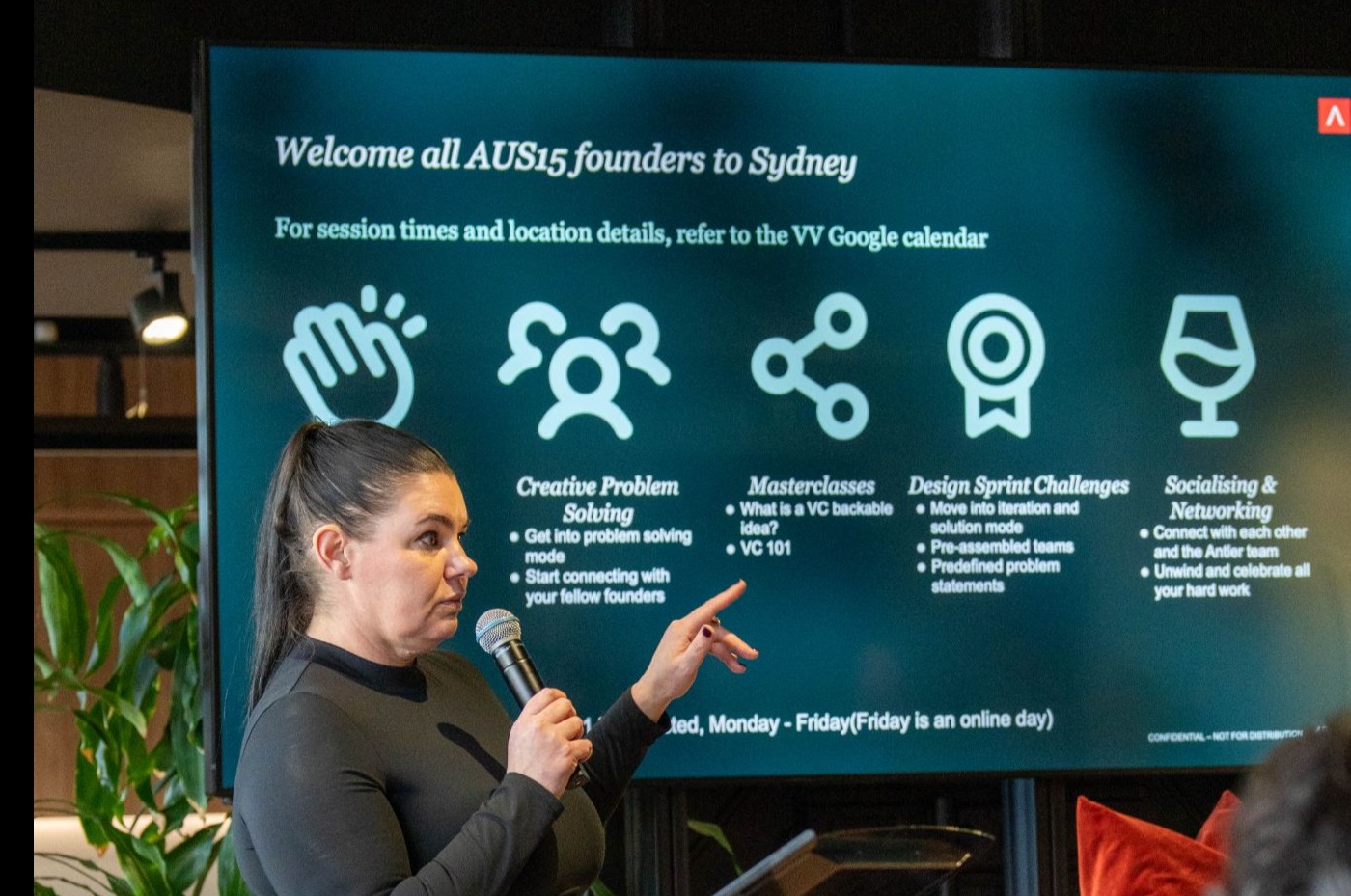
Antler is a global inception-stage VC, and Australia’s only truly global early-stage VC. It invests in outlier founders at the earliest stage of building a company, which is why the first week looks different from what most founders expect. Rachel Guest, Program Director at Antler Australia, describes the room founders walk into:
"We provide a high-feedback, rapid-learning environment, giving founders the guardrails to test out their hypotheses quickly, pivot where required and set the pace."
Staying open on the idea
For some founders, the idea is the last thing to settle. Matt Doughty arrived with more than a decade in enterprise software sales and went on to co-found Prefactor. He made one decision early and has been clear about it since:
"The question you almost have to ask yourself in Antler is like, do I want to be funded or do I want to have my idea funded? And I was never bothered about the idea," Matt says.
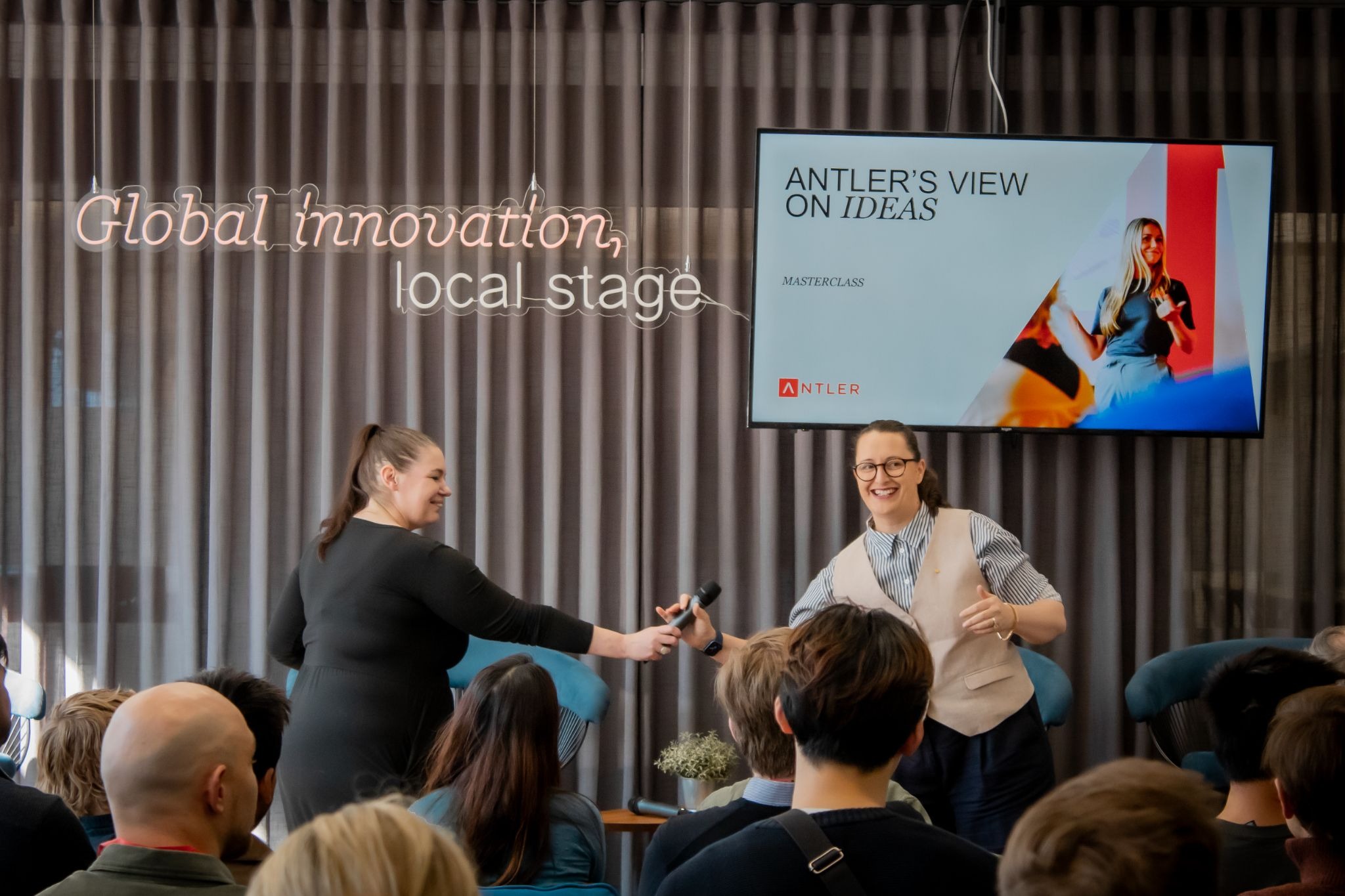
That openness is what lets founders change direction once customers start talking back. It is also why the residency is built around customer discovery, market validation, pricing and go-to-market, taught by Antler's investment team and by portfolio founders who have already done each of them. Norman remembers the master classes as one of the main reasons the program worked for him:
"I learnt a lot from the masterclasses on customer validation to building repeatable GTM and, most importantly, met a lot of great peer founders," he says.
From customer conversations to first customers
Sophie Sherman started building Ourfit in January 2026 while working full-time as a tech lead and head of design. Three weeks into another startup program, she decided to go full-time on Ourfit, and she joined Antler Residency to work alongside other founders and to understand venture capital well enough to decide whether it was the right path. In the residency, she learned something she had never done before, which was to cold call.
"Literally just call your perfect ICP and talk to them without selling,” she says. “Ask them broad questions to get them speaking, and find a way where you are the one talking so you learn as much as possible about them.”
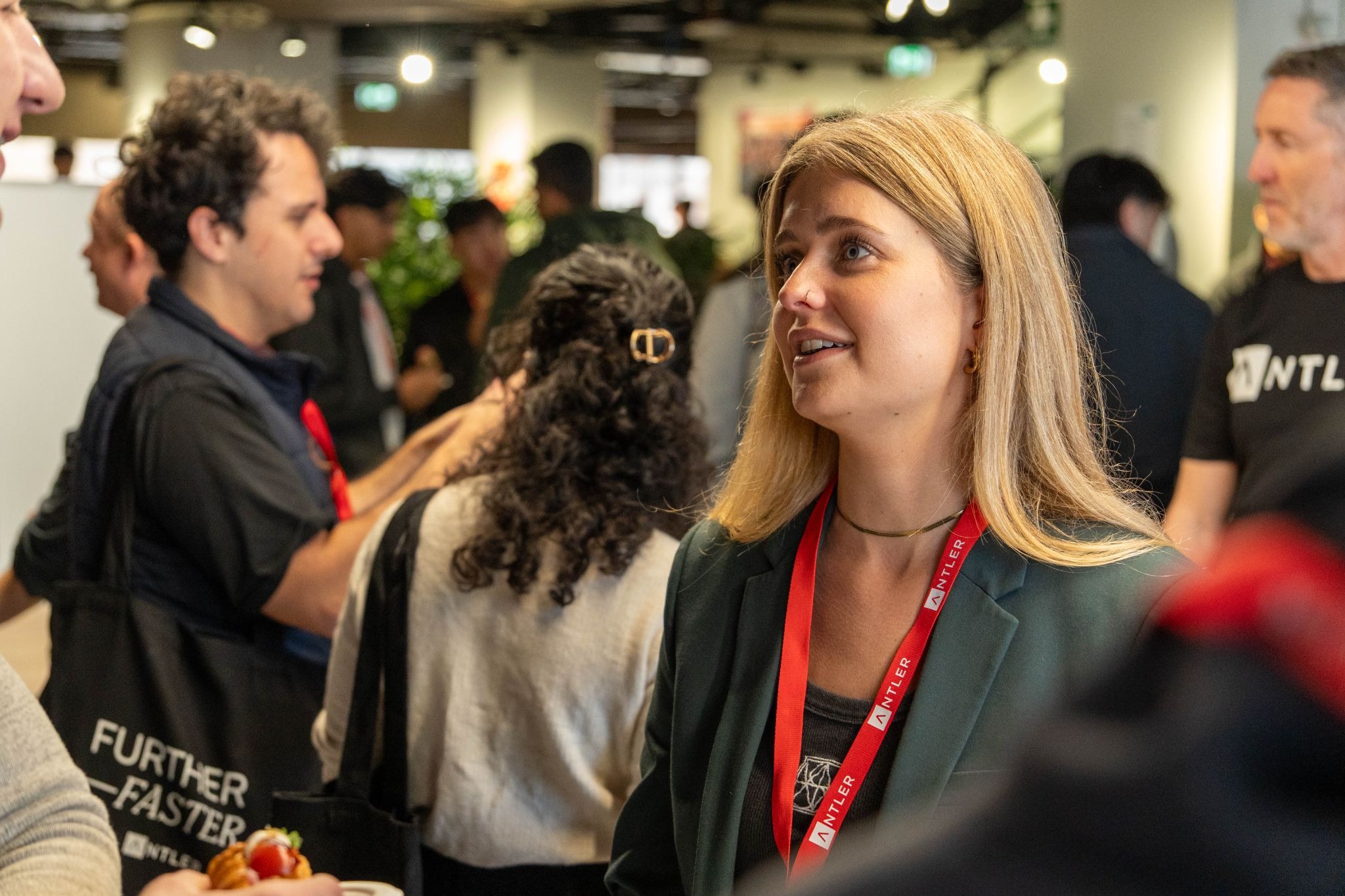
She says it would have taken her much longer to work this out alone, because she had never cold called before. She also valued and learned from "the maths behind VC and understanding their thinking."
Phillip Craig, Founder of Accretion Bio, learned a similar lesson in a very different field, which is that people outside your niche are the most useful audience:
"How much value you can get from people who know nothing about your niche, asking the simple questions you take for granted and often overlook."
The aim is customers, not guesses. Founders leave the residency with real customer conversations behind them, and those conversations turn into paid letters of intent and first customers, with global markets in view from the start.
Finding the other half
For individual founders, one of the most important events of the eight weeks is usually meeting a co-founder. Norman met Jonas in the cohort, and the two went on to start OpenDebt. Founders spend time working on real problems together, so they can see how a working relationship holds up before agreeing on equity.
"The program provided a safe place for co-founders to meet each other, try it out and build a generational business together and a lifelong friendship," he says.
"For my startup journey, finding my co-founder Jonas on this program is massive. It's very hard for me to imagine OpenDebt will still exist if I didn't meet Jonas on the program."
Pre-formed teams are just as welcome. Founders who join with a co-founder already beside them get the same room to test the idea, pressure-test the team and move fast together. For Phillip, the residency did not change the founding team, but it showed where the team had a gap:
"Identifying a gap isn't a weakness, if it's clearly in the growth plan."
Building at the frontier
Some founders arrive with a problem that takes more than a product to solve. Carley Scott had already built Australia’s first commercial spaceport and won world-first NASA contracts when she joined the residency. She came looking for co-founders with defence or IT expertise, and went on to build Space CoLAB, a company working on quantum-secure communications for defence and critical infrastructure. What drew her to Antler was how it thinks about founders:
“The philosophy about being interested in people and how those people evolve as the primary starting ingredients, I think, is right,” she says.
Phillip, whose company Accretion Bio is building drugs for advanced brain disease, works in a field that looks nothing like a typical startup, and he had to find a way to explain it to people outside it. The residency pushed him to do that within weeks:
“Getting the story right to bring non-scientists along for the ride. Challenging my assumptions, and validating with real feedback from industry within weeks, not months,” he says.
For the investors who back founders like Carley and Phillip, the person comes before the technology. James McClure, Partner at Antler Australia, prioritises this when assessing frontier founders at the inception stage:
“It’s more important to think about the founders: what’s their ceiling, drive and unique edge. Then for the business, the key pieces are what is the IP, what is the true validated market, and what are the most important inflection points in their growth,” he says.Whether the company is software, quantum communications or drug discovery, the eight weeks move at the same pace.
The pace, and the people around it
Every founder in the cohort feels the pace. Rachel says the thing that surprises founders once they are inside is "the pace at which our best founders move and the importance of strong storytelling skills." Sophie put it in terms of her own growth:
"The amount of growth that I was able to have in such a short period of time because of everything I was incrementally doing throughout."
Norman found support in the portfolio founders who visit the cohort and talk openly about what building a company is really like:
"The program connected us closely with many portfolio founders, and I was fortunate enough to become friends with many of them. They are very open to sharing their founder experience (good and bad) with us, and it has been very valuable to me on what to expect in the future and how to navigate through challenges."
From Residency to Global Markets
Teams that are ready pitch to Antler’s investment committee for pre-seed investment. Founders who earn it leave the residency with an Antler pre-seed investment and a clear capital pathway from pre-seed to Series C, with Antler Elevate providing scale-up capital from Series A onwards.
For women founders, the new fund adds more: Momentum, an Antler initiative powered by Coaxial. As part of this partnership, women founders receive $60k in non-dilutive funding from Coaxial when they secure Antler’s initial investment. And if Antler makes a follow-on investment, Coaxial will provide an additional $60k in non-dilutive funding. It means more capital in the first year, and a stronger position when the next round comes.
Capital is half of going further, faster. Then there is the world beyond Australia. Founders in the cohort build with a global mindset from day one, and Antler has an international network of investors, advisors, mentors, talent and founders across 27 locations worldwide, and a global pathway to success. Once a company is in the portfolio, Antler Embark, our traction sprint in San Francisco, helps founders expand to the US. Norman has just joined Embark in San Francisco with OpenDebt, and says it made the move straightforward:
“Silicon Valley is a magical place for international founders, and Embark helped us settle in straight away, connected us with 100+ potential buyers, investors and founders who’ve been there and done it. You wouldn’t believe how much we could achieve into just a few weeks! The team made it possible, and made it heaps of fun too. Can’t recommend it enough!”
Michael Kron, General Partner at Antler Australia, describes what that support looks like:
“Once in Antler’s portfolio, founders receive hands-on local support alongside the full power of the Antler global platform. From $850k+ in tech perks, to fortnightly workshops, to 1:1 coaching, Antler builds alongside you and is an extension of the founder team. Those with US ambitions will find a home with us. With the Antler Embark program, we take founders to the US to accelerate traction, crunching what normally takes 18 to 24 months into 12 weeks.”
Apply Now
Applications open on Monday, 2 November, 2026. The application process runs through to the beginning of February, and the residency starts on 8 February, 2027 in Sydney, Melbourne and Brisbane. If you are not sure yet, start with an event and meet the team and portfolio founders. Norman, who applied as a first-time founder and has just joined Embark in San Francisco, says that is where he would begin:
“Just do it, super simple process, and the Antler team is great at responding. Attend the Antler events if you are unsure, go talk to the team and portfolio founders.”
Once you have decided, Sophie and Phillip say, “just got for it.”
“Just go for it - the [residency] experience in and of itself is valuable for growth, not only for your business but also for you as an individual,” says Sophie.
“Talk to the team, keep an open mind, and don’t undervalue the power of the venture builder community around you - founders and partners,” Phillip says.
Apply to Antler’s residency in Australia
Whether you are still working out what to build or already building it, the first step is the same: start the conversation. Are you an exceptional founder with global ambitions? Go further, faster with Antler. Apply now!
ANTLER RESIDENCY —LAUNCH YOUR STARTUP
Antler backs exceptional founders to go further, faster.