

Every robot’s navigation is tuned by hand
The problem is worst where robots are most useful. Long hospital corridors, blank warehouse walls, tunnels and underground sites have no GPS and nothing distinctive for a camera to lock onto. In these places, even well-funded visual navigation systems fail. The usual fix is to bolt on expensive lidar, or to pay thousands per unit for hardware-locked inertial systems that still need tuning.
So the industry keeps solving the same problem from scratch, robot by robot. Nothing in today’s robotics stack makes that work reusable.
Marco: accurate positioning on cheap sensors
Marco build navigation and localization software that tells robots and AR devices exactly where they are. Their software fuses camera and inertial (IMU) data with learned models, so devices can track their position accurately on low-cost sensors and don’t need lidar. Every moving robot already carries an IMU. That makes it the one sensor Marco can build on regardless of form factor.
They license a software development kit (SDK) with self-serve onboarding, and every deployment sends real-world motion data back to them. That loop is the long-term asset. Each new customer adds hardware, environments and edge cases that make the next deployment better.
The evidence so far:
- They have a live design partner. A European large-venue AR navigation company has deployed the SDK, which gives Marco 118,000+ panoramic images plus live data from thousands of users.
- The technology holds up on public benchmarks. Marco are #2 on the IROS 2026 IMU challenge leaderboard. On RoNIN, the standard public inertial benchmark, their earlier model cut average error by roughly an order of magnitude after a single short adaptation step.
Two founders who have already built this inside big tech
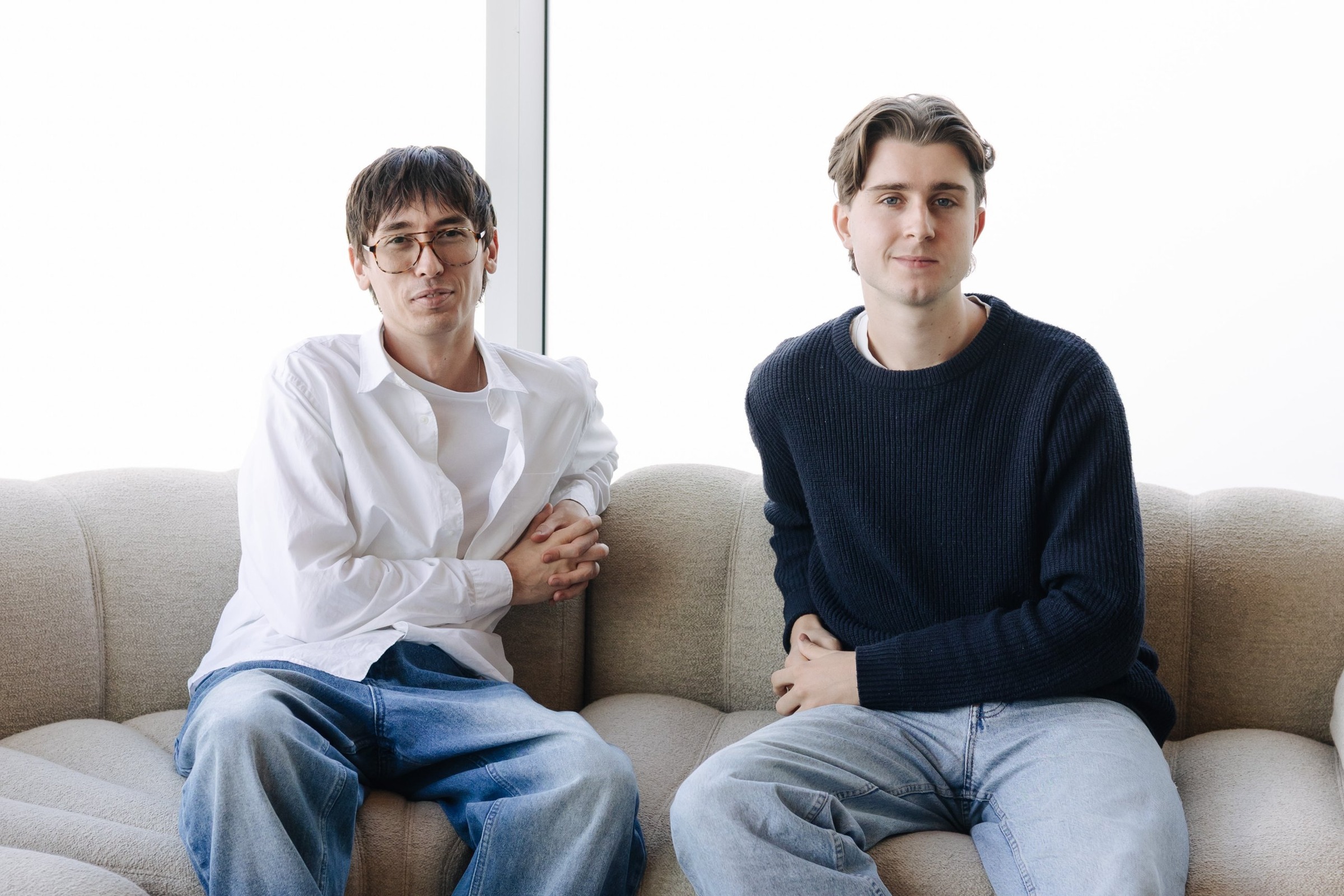
Korab Berisha (CEO) has spent his career on this problem. He built indoor mapping and navigation at Hyper and at Huawei R&D UK, where he shipped multi-sensor positioning pipelines that combined inertial, WiFi and magnetometer data. A learned inertial model from his Huawei lab now runs across Huawei’s indoor positioning system. Most recently he was a Senior Research Engineer at Lawhive. By his own account, he would have been Marco’s customer three and a half years ago.
Rana Alkhoury Maroun (CTO) was an ML Researcher at Meta, where she worked on foundation models. Her PhD at the University of Edinburgh was in NeuroAI, building small, efficient learning systems modeled on how animals navigate. She and Korab first worked together on Huawei’s indoor positioning research team, and Marco’s core model grew out of that collaboration.
The pairing matters because talent is the bottleneck in this field. Marco have two people who have built learned positioning systems at scale and can talk through the trade-offs with the engineers who buy.
What convinced us: focus on execution and early proof
Language and vision have both followed the same pattern, where hand-tuned pipelines lose to learned systems once data and compute scale. Robot positioning hasn’t had that moment yet, even though it sits underneath every robot. We liked that thesis from week one.
Early in the residency, Marco looked like a lot of deep-tech teams, with exceptional technical founders and a horizontal vision. Over the residency they found their wedge in large-venue AR navigation.
Korab and Rana trained Marco’s first model on a 500-hour multi-platform robotics dataset they assembled themselves, and they signed their first design partner before investment committee. Today, the same SDK runs in hospitals, tunnels and underground inspection sites.
We’re proud to be Marco’s first investor, and we’re excited to back Korab and Rana as they build the learning layer for physical intelligence.
ANTLER RESIDENCY —LAUNCH YOUR STARTUP
Antler backs exceptional founders to go further, faster.