

We're drowning in apps, not work
The average person now juggles more than 30 applications in their daily life: email, Slack, WhatsApp, Notion, calendar, and dozens more. They toggle between apps roughly 1,200 times a day, losing nearly 24 minutes of focused work every time a notification pulls them somewhere new. More than half of a knowledge worker's day is spent not on their actual job, but on the administration of their job: chasing updates, synthesising information, checking in across systems.
The cruel irony of modern productivity software is that the tools designed to make us more effective have collectively made us less so. Every new app demands attention, promises clarity, but adds complexity. And nobody has built the thing that sits beneath all of it, until Cloop: it reads across the noise and tells you, simply, what actually needs your attention today.
One shared to-do list for you and every agent you use.
The product that exists today began as something much more physical. The original prototype was a piece of hardware: a wearable device that ran for eight hours at a stretch, absorbing ambient voice conversations and building a persistent memory of your working day. The team realised that the real insight wasn't the hardware, it was what happened when that context was available: nothing fell through the cracks.
Cloop is the distilled version of that insight. It connects to the apps and accounts you already use, automatically extracts what matters, and surfaces it in a single interface. It doesn't ask you to change your workflow or adopt a new system. It reads the signal from the tools you already live in, and closes the loop.
The insight behind the product is simple but important: people drop their commitments because coordinating across dozens of apps and conversations is genuinely, cognitively hard. Early data from Cloop's alpha users suggests people leave roughly 60% of their work unfinished because the sheer volume of incoming tasks overwhelms any human's ability to track them.
What makes this technically possible now, where it wasn't even two years ago, is the maturity of AI integration protocols that allow a product to read across services without rebuilding them from scratch. Cloop meets users where they already are rather than asking you to adopt a new interface, and it becomes the intelligent layer beneath the ones you already have, and increasingly, the layer through which AI agents will interact with your working life on your behalf.
Founders built for this moment
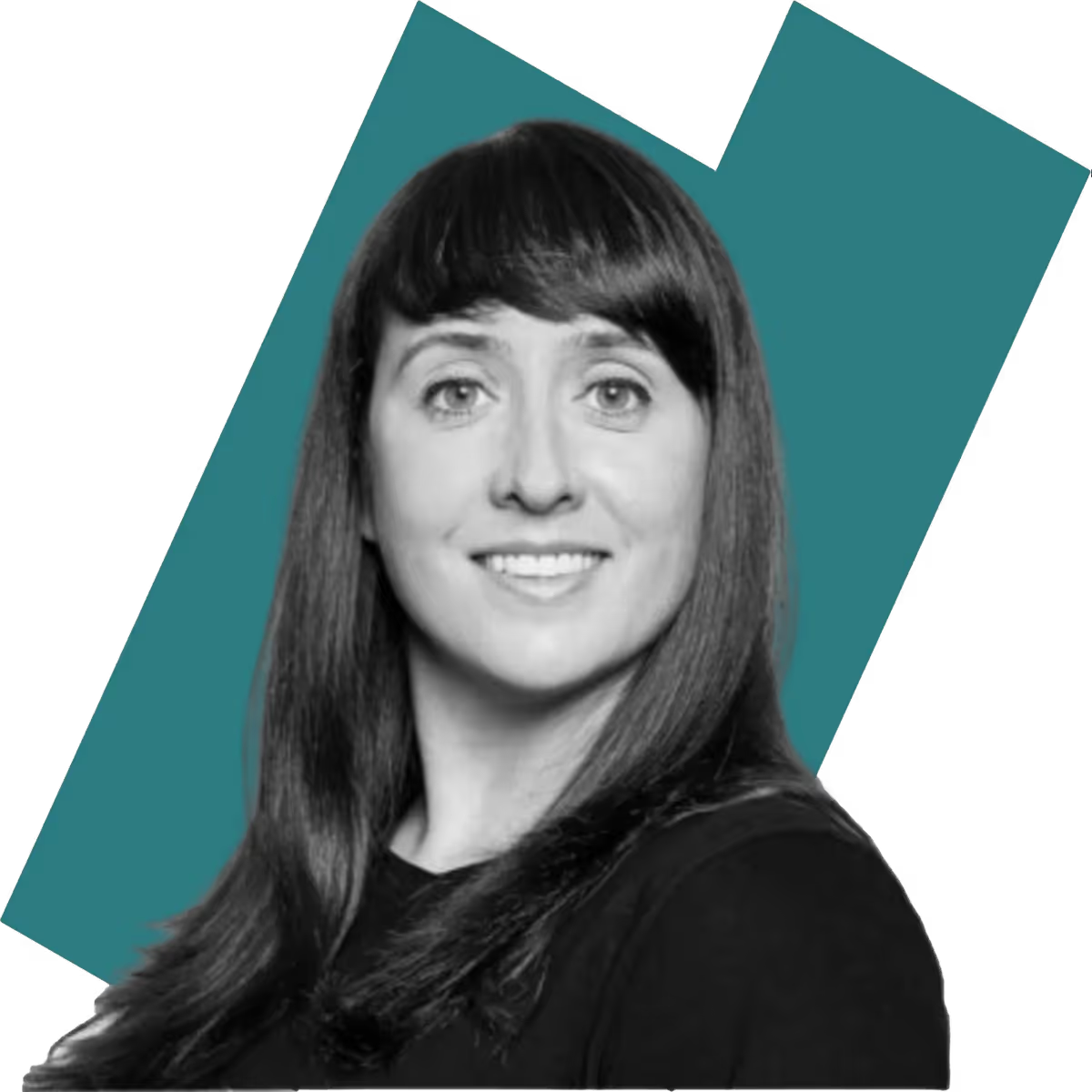
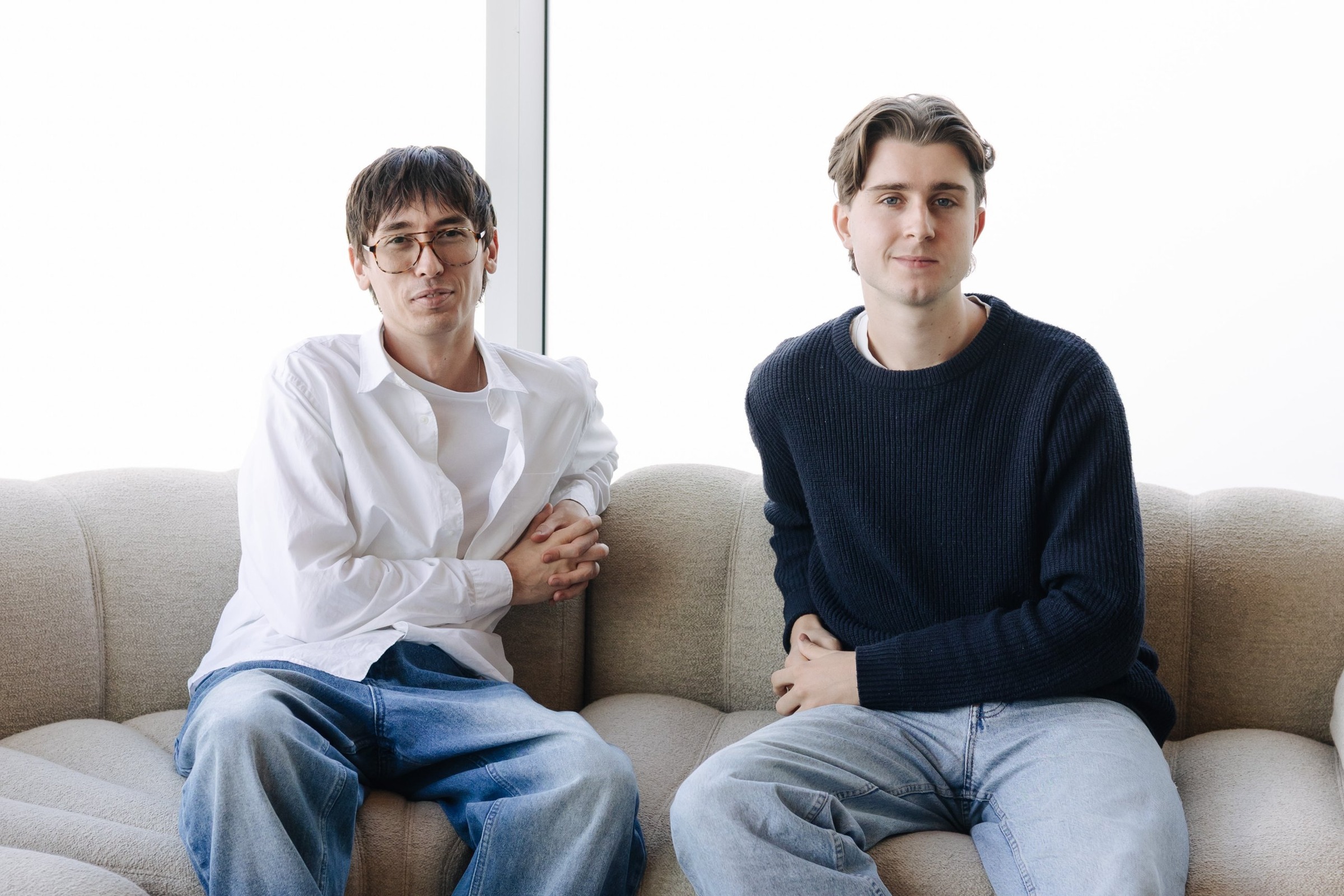
Charlie Barlow (CEO) is a serial builder. He graduated from Goldsmiths with a first in Computing, but by the time he did, he'd already spent years shipping products and building communities around technology: from running the university's tech society to teaching robotics, co-founding an edtech platform that ran for two years, and launching an AI-powered fashion product. He builds his way to the right moment instead of waiting for it.
Michael Hurley (CPO) brings technical depth. He studied Communications at Cardiff before moving into AI engineering, an unusual combination that gives him a dual lens on the problem: he understands how information flows between people and how to build the systems that handle it. Before Cloop, he was part of the founding technical team at KEATH.ai, where he built the entire customer-facing product and co-designed a multi-agent assessment system (specialised LLMs handling rubric extraction, evaluation, and feedback generation) that went on to mark hundreds of thousands of assessments. He also co-founded ELO, an LLM auto-routing platform that dynamically selected the best model at inference time based on real-time benchmarks, which maps directly to how Cloop prioritises signal across a user's working life.
Together they're a natural split: Michael on product and intelligence, Charlie on commercial and execution. Two founders who've both learned, through experience, that the hardest part of building something people rely on is knowing what to cut.
Antler's investment thesis
Consumer productivity is a crowded space, and it's right to be sceptical of new entrants. We've all seen to-do apps. What convinced us to invest in Cloop is a combination of product clarity, founder conviction, and timing.
The product philosophy is unusually coherent for a team at this stage. Michael and Charlie have been deliberate about what Cloop is not: another dashboard, another feature-rich platform competing for screen time. The earliest users include Chiefs of Staff and Founder Associates at VC-backed companies who describe the product as something they "can't stop thinking about".
The timing is also right. The emergence of MCP, the open protocol that allows AI agents to read from and write to applications on behalf of users, changes the nature of the opportunity. Cloop is already integrating with it: users can query their tasks, draft follow-ups, and take action entirely via AI, without opening the app at all. That makes Cloop more than a task manager. It's the layer through which AI will eventually coordinate your working life.
And the founders have the right instincts for the moment they're building in: deeply technical, commercially literate, and convinced that the best productivity tool is the one that asks the least of you. We're proud to back them.
ANTLER RESIDENCY —LAUNCH YOUR STARTUP
Antler backs exceptional founders to go further, faster.