
.avif)


As demand for large-scale drone operations grows, air traffic needs ground rules.
In the last six months we have seen drones everywhere they’re not supposed to be: hovering over military bases, entering airport runways and restricting first responders. The challenge of rogue drones is an increasing problem as the skies become more congested.
These versatile, affordable and easy-to-fly devices are set to bring immense societal benefits, such as automating dangerous jobs, delivering vital medical supplies, and surveying fragile ecosystems, among many other uses. But there is currently no way to scale this.
To carry out a commercial drone operation today, you have to block an entire airspace. In Sweden, regional health authorities report that drone delivery zones routinely hold medevac helicopters for 10-15 min awaiting clearance. Last year, this resulted in an ambulance helicopter being unable to reach a patient suffering a cardiac arrest on the ground. In the US, an aircraft “Super Scooper” fighting the Los Angeles wildfires was grounded after colliding with an illegal civilian drone.
With BBC Research (2024) estimating drone market value reaching $24B by 2029, the skies will not be clearing anytime soon. As commercial drone operations scale globally, so does the need for shared air traffic-management.
AirDodge is building infrastructure in the sky, with dedicated lanes for drone traffic
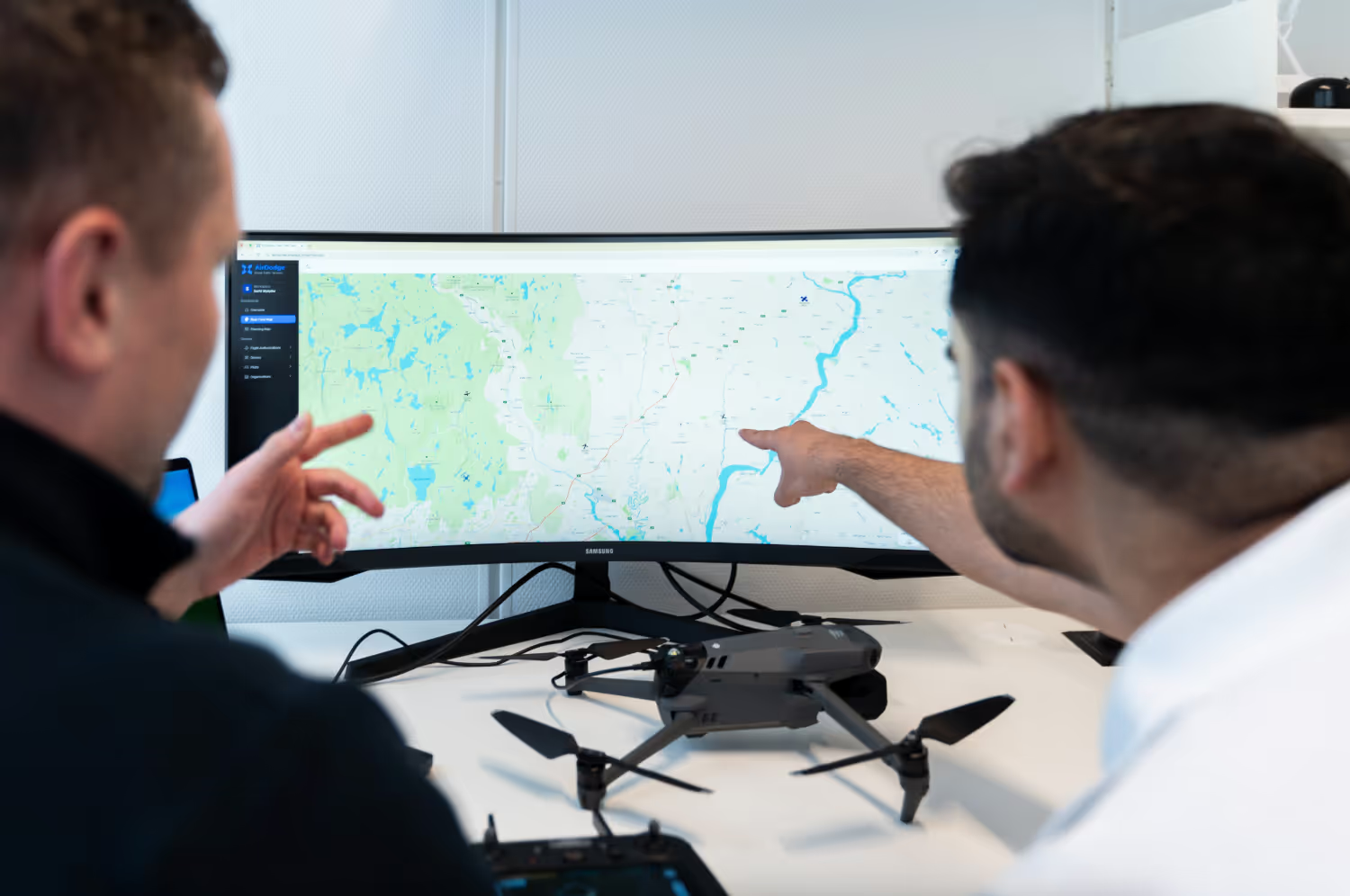
AirDodge is a U-Space software platform designed to manage large-scale drone operations across Europe. The cloud-hosted platform includes a real-time map, and aims to automate flight authorizations.
“Through these services we can manage drone-traffic in real time, safely preventing collisions between manned and unmanned air traffic, while allowing commercial scalability for drone operations.” says founder Umar Chughtai.
The U-Space framework: Enabling shared European airspace
In 2024, EASA introduced four mandatory U-Space standards, ensuring drones plug in to a certified service provider that can track, authorize and de-conflict drones and manned aircraft. AirDodge is building those services:
Every drone is digitally identified through Remote ID, making it visible alongside crewed aircraft. A Real-Time Map displays the speed, altitude, and geo-location of all participants in the sky, providing operators with full situational awareness. Geozones provide a 3D overview of obstacles and restricted areas, and flight authorisations, which used to take months, can now be automatically processed. Combined, these four services provide operators with the tools needed to execute complex missions safely, at scale and beyond visual line of sight.
The AirDodge journey began with a close call
During a drone mission, CEO Umar Chughtai narrowly avoided a collision with a helicopter. The incident highlighted the urgent need for safer skies and sparked the idea and concept behind AirDodge. After earning an Aerospace Engineering degree from the University of Illinois, Umar moved to Sweden to pursue a master’s in drone robotics, where he also launched his first startup, Skyqraft.
Umar founded AirDodge in Stockholm in 2022, where he faced tough odds when it came to launching. Investors dismissed drone tech as hype, while Sweden’s bureaucratic delays in processing U-Space legislation stalled the commercial drone market, making the early Swedish days of AirDodge a frustrating battle for legitimacy and traction. Due to this he relocated the company to Oslo the following year, drawn by Norway’s innovative drive when it came to aviation and low levels of bureaucracy.
Here he met his current CTO and co-founder Serhii Mykytko, a Ukrainian systems architect with 15 years of building large-scale telecom back ends. Fascinated by robotics from a young age, Serhii quickly discovered the power of software to solve real-world problems. As the war in Ukraine turned civilian airspace into a battlefield, he had seen firsthand how dangerous an unregulated sky could be.
Umar and Serhii share a vision for making low-altitude airspace safe and accessible. Together they run a lean team, including three developers, working toward full U-space certification by Q2 2026.
Why Antler invested - twice
Antler backs founders who address regulation-heavy bottlenecks with speed and pragmatism. AirDodge fits that thesis: a €24 billion, regulation-mandated market; first-mover advantage in the Nordics; and a team that understands both code and cockpit.
Our conviction is also founder‑led. In 2019 we backed Umar’s first company, Skyqraft, and the results confirmed his ability to execute in regulated skies. By turning months of paperwork into automated APIs, AirDodge unlocks immense possibilities for drone applications at scale - without grounding first responders.
Looking ahead
2025 will see the company’s first U-Space sandboxes in the Norwegian municipalities of Bærum and Røros, giving regulators and partners a live testbed. Here drones will demo real-world applications, from delivering medicine to remote cabins in Røros, to detecting forest fires in suburbs of Oslo. Once certified, AirDodge aims to license its platform across Europe, turning national corridors into a continent-wide digital highway.
The drone market will flourish only if the sky feels like an invisible backdrop again: quietly safe, predictably governed. AirDodge is making this happen, so tomorrow's pilots, medics and civilians alike never have to look up in fear or frustration.

ANTLER RESIDENCY —LAUNCH YOUR STARTUP
Antler backs exceptional founders to go further, faster.


.jpg)
