

Why the Best Australian Startups Think Like Global Companies
SuperIT builds AI agents that resolve IT support tickets. It is a need that does not stop at a border.
The plan on the table was the familiar one: test the product in Australia, grow it here, expand later. SuperIT almost took it.
Then the company looked hard at the speed of growth it was aiming for and weighed that against what Antler's team had shared about what drives startup success. The plan changed. The US would not be a second chapter. It would be part of the first.
The market responded. SuperIT’s pre-seed round was led by a US fund, which is unusual for an Australian company at this stage. Most local startups raise their first round from local investors, and many only meet US capital at Series A or later. SuperIT got there on day one, because it was already building like a company that belonged there.
That decision, to build for a global market from the start and expand early, is where this story begins. What it took, and what it opened up, is the rest of this article.
Building Global From Day One
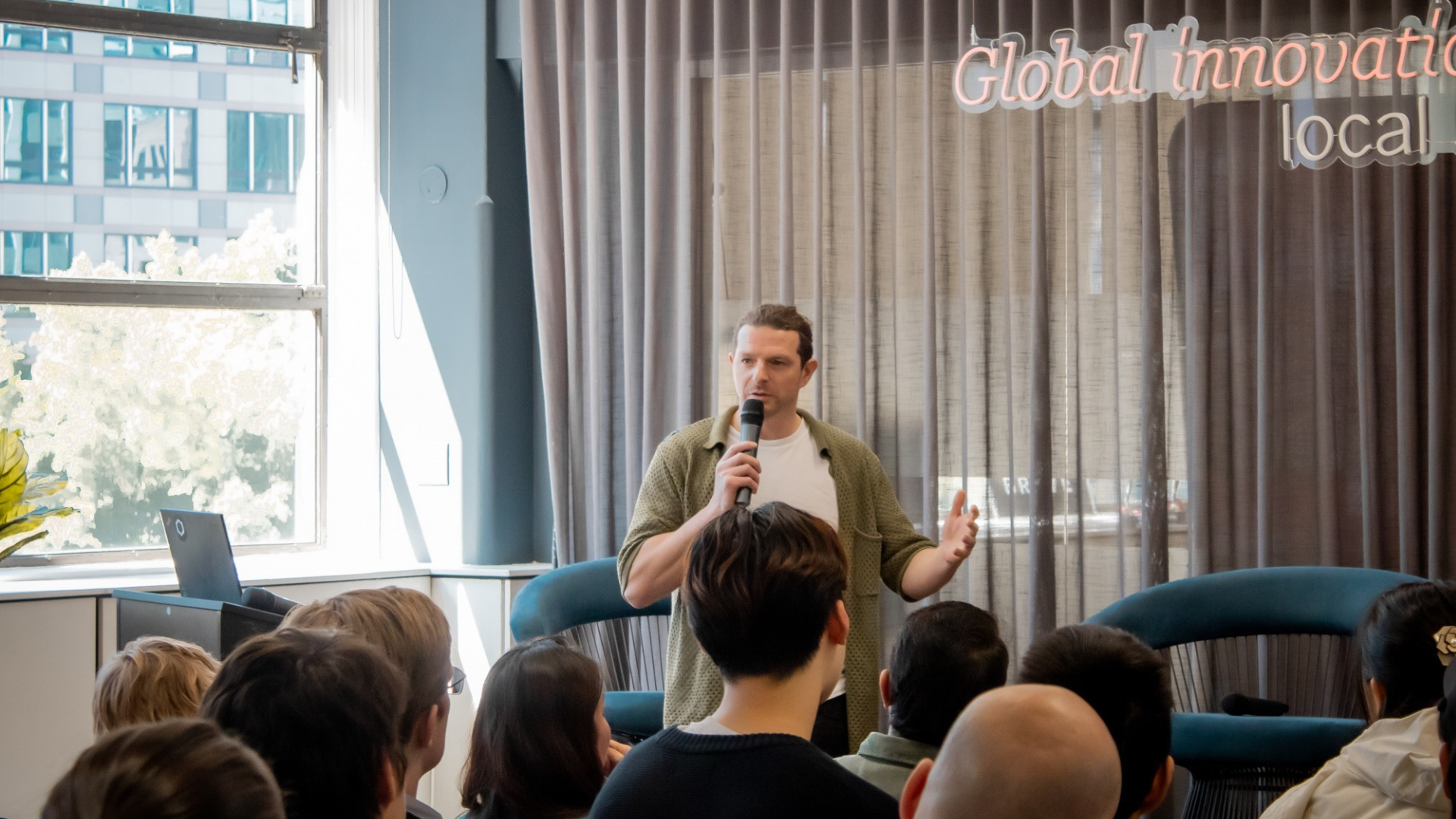
Michael Kron, Partner at Antler Australia, draws a clear line between two kinds of companies: an Australian startup, and a global startup that happens to be based in Australia.
The second kind sets a different bar. "If you're a global startup that's based in Australia, you need to be world-class, not Australian class." That means asking where the centre of gravity sits for your industry, your technology, and your talent, and building to that standard.
The concept also changes who you build for. Kron says the question stops being who the closest customer is:
"It's not who is the customer that's closest to me that I know best. It's who is the ideal customer from around the world that I should be targeting, and how do I build a product that's fit for that particular subset of customers," says Kron.
The shift reaches well beyond product. Kron calls it a major mindset shift:
"It commands a major mindset shift around what you're building, how you price, the standard by which you hire, where you locate yourself, and the bar that you set relative to where the centre of gravity for what you're building is."
James McClure, Partner at Antler Australia, draws the same conclusion:
"Having a global mindset from the start gives you the best likelihood of outsized success."
Founders who make the shift early have more room to grow into the opportunity ahead of them.
Three Founders Building for a Global Market
Three Australian founders show what that mindset looks like in practice: SuperIT, Sophiie AI, and MANTA Machine Services. The first two companies are AI products aimed at problems that exist wherever businesses operate. The third builds AI-native hardware infrastructure for industrial sites.
SuperIT builds AI agents for IT support. The agents triage new tickets, investigate using ticket history and connected systems, take approved actions, and write outcomes back to the customer's ticketing system, with humans in control. Its customers are managed service providers scaling to more clients, and internal IT teams.
Sophiie AI is an AI receptionist and office manager for trades and service businesses. It answers calls, books jobs, sends quotes and invoices, schedules crews, and follows up with customers. The company says it has handled more than 1M calls and works with more than 1,600 businesses, from electricians and plumbers to landscapers and builders.
Manta Machine Services, founded by Ashley Baxter, builds hardware systems that make industrial perception and control affordable and repeatable to deploy. Its first commercial application, Monty Pro, serves waste management facilities, combining field hardware with software for industrial automation. The product launched in Australia and began selling into the US less than three months later, with 40+ sites live across both geographies.
The common thread is intent. SuperIT and Sophiie AI solve universal problems for a specific buyer, and MANTA Machine Services was selling into the US within months of launch. None is built around a local quirk, which makes the US a natural next step.
Questions to Ask Before You Pick a Market
Global ambition still needs a method. McClure points to two questions. The first is about the problem itself:
- "What are the dynamics of the problem that I'm exploring that are truly global?"
If the answer is a local rule or habit, the market stays local. If it is a pain that shows up wherever businesses operate, the ceiling moves.
The second question is about timing:
- "What does the why now look like in each of those markets?"
The same product can be early in one country and late in another, so the case has to be tested market by market.
There is also a credibility test. McClure says founders "still need to be able to show that you have an ability to get outside of your existing network." Investors want proof that the pull extends beyond the people a founder already knows.
Why the US Belongs in the Plan From the Start
Kron’s view is that Australian founders have a natural edge here. There are very few sectors where you can build a big tech business without going global, so the best founders here learn early to aim at the world, not just the home market.
"It's essential that at one point on a founder's journey, they are going to need to take their product and their business to the world," he says.
Founders also need to show a plan and the ambition to do it, he says, because that is what attracts venture funding in Australia and globally.
He argues the case for moving early is strong right now, because capital and talent have become advantages in their own right, saying that "Access to capital and talent is a form of moat in itself."
McClure says investors are already backing that wider field: "The globe is available, and that's what people are backing. That's the reason why going earlier than people typically think is an important area, particularly in getting funded at a global scale."
Kron adds the reason behind it. “The capital pools and talent in San Francisco and the US are much denser and deeper than what’s available in Australia. Founders who tap into them early get a real edge over those who don’t,” he says.
Speed matters too. In the current environment, moving fast is a critical requirement, and nowhere is the pace faster than Silicon Valley. Kron puts the concentration of AI value this way: 20 AI companies worth $2.3 trillion sit inside one 3 km circle in San Francisco.
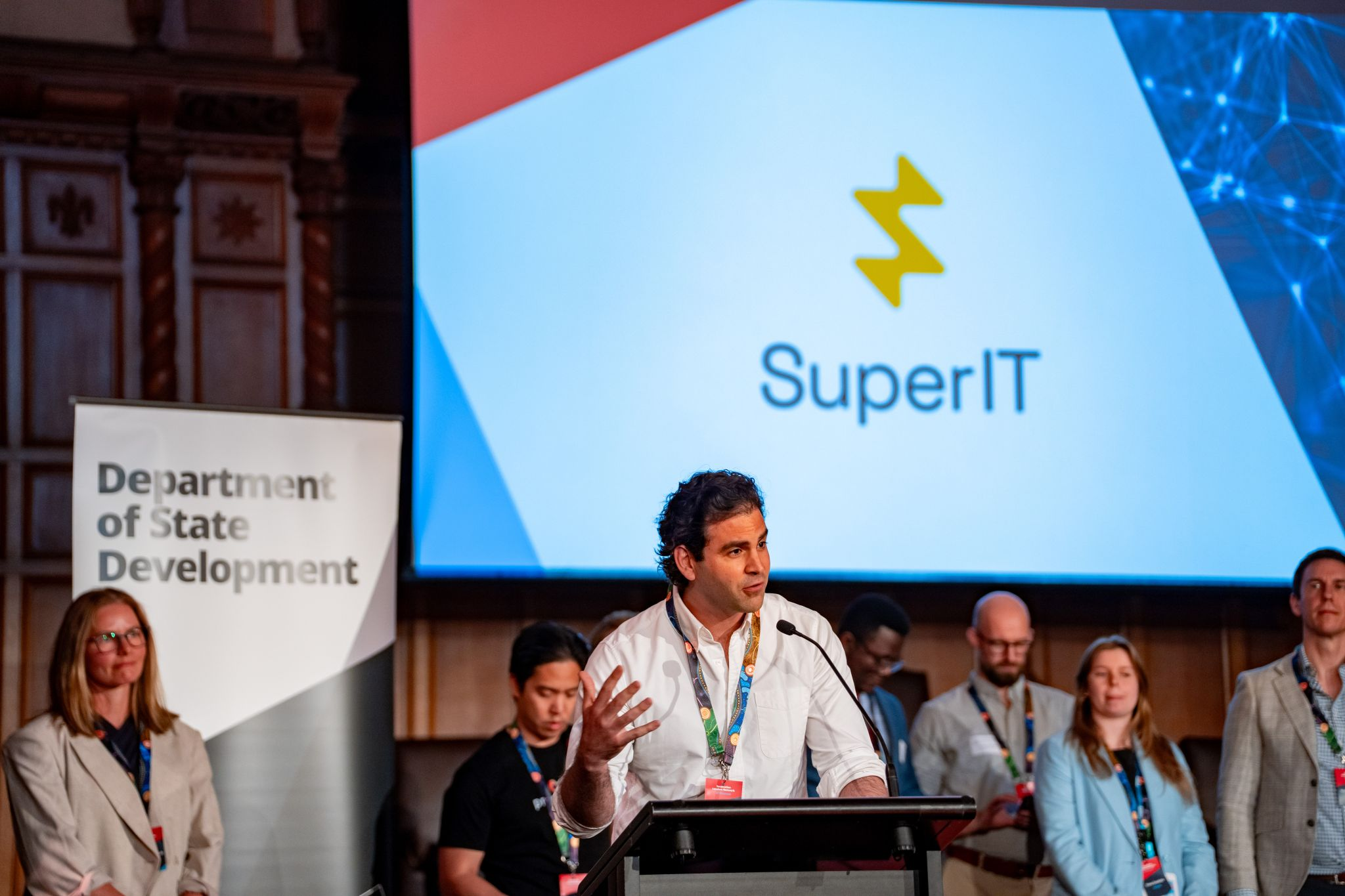
Christopher Sale, co-founder and CEO of SuperIT, describes the same pull from the founder's side.
"[The US market] is SO big, the capital pool is SO deep, and enterprises and businesses are much more receptive to sales and giving startups a shot (especially with AI startups right now)," he says.
Jacob Banks, co-founder and CEO of Sophiie AI, reaches it from the product: "If you're solving a global problem, you have to be there to truly be a global player."
Sale's conclusion is blunt: "You are at a massive disadvantage if you don't go."
How to Win in the US: Narrow Customer, Bold Vision
According to Kron, going global means doing a few things differently. The first is focus: "While the US prize is 100x what it might be here in Australia, the market is also 100 times deeper, which means their focus needs to be 100 times narrower."
Founders need a very specific ideal customer profile, with the product and the go-to-market motion built around it. In his view, this is a success factor many founders miss.
The second is product-market fit: "Product-market-fit simply just does not transfer between markets. It doesn't travel," he says. Founders should find it themselves in the US before hiring people to drive a sales motion.
The third is the ecosystem. Kron says founders should embed themselves in the right talent, angel investors, VCs, industry experts, and advisors. Getting into the right networks, earning references, and being in the right "whisper circles" is what helps founders navigate the market. The fastest way in is a big idea you can say in a single sentence at a networking event, one that makes people want to know more and spend time with you.
"You go to the US with an extremely narrow ICP and an extremely broad, exciting and bold vision," he says.
That pairing is what helps founders move fastest. Narrow focus drives the sales. A bold vision makes people want to help.
Antler Embark: A San Francisco Sprint Built for US Traction
Embark is Antler's answer to that checklist. It is a four to six week traction sprint in San Francisco for founders building AI-first companies for the US market or thinking about global expansion, global traction and product-market fit.
Antler's team works alongside the founders daily. The sprint covers:
- Product thinking sessions and customer discovery sprints
- Positioning and narrative refinement
- Cultural training on US go-to-market and buying behaviour
- Real-time pressure-testing of go-to-market strategy
- Closed-door 1:1 sessions with SF founders, operators, and investors
- Peer sessions and shared learnings with the rest of the cohort
Founders can expect first US design partners or paying customers, an active sales pipeline, sharper US positioning, an advisor network in San Francisco, and a stronger fundraising story.
The community is where the value compounds. Going through it as a connected, supportive group of Antler-backed founders means trading intros, lessons and momentum with people facing the same challenges in real time. The wider network is part of the offer too, with more than 95 Silicon Valley operators, investors, and founders connected through the program. The result? 75% of Embark alumni have growing in the US market.
Embark runs twice a year, and the next edition, its fourth, starts in October 2026. Each intake is timed around SF Tech Week and SaaStr calendar milestones, so founders land in San Francisco when the right investors, customers and peers are in town. Founders outside the US apply through their local Antler location.
What Changed for Three Founders Once They Were in San Francisco
Founders cite customers, capital, and talent as benefits of being there. But none names them as the main thing. What they describe is something deeper: a shift in what they believe is possible.
SuperIT: "That could realistically be me"
Sale had heard, many times, what being in the US could do. He thought he understood. Then he spent time among founders who had built exceptional businesses and heard their strategies first-hand.
"I was able to click in my brain: 'That could realistically be me.' I could see myself in their shoes," he says.
He adds that once you have built an exceptional product, the go-to-market tactics are "pretty simple and not exactly rocket science."
The magic, in his words, is the market itself. For Sale, the biggest return was a mindset shift: more ambition, more belief, and more confidence from being around "a high density of highly ambitious and talented people."
Being told is not the same as seeing it. For Sale, it took being in the room.
Sophiie AI: belief, plus the local nuance
Banks’ account comes before Sophiie's US launch, so it is a view from the start of the journey. The value arrived before a single US customer did.
He says doing Embark gave him the belief that Sophiie could do it in the US. Founders on the program who had made the move, with similar go-to-market strategies, were the proof.
"Chatting to founders through the program who had gone to the US, with similar go-to-market strategies, really gave me the confidence that we'd be able to do the same if we had the right product," Banks says.
There was a practical gain as well. Banks spent time with customers in the US, learning how their local markets work, "to really understand the nuances between the countries."
MANTA Machine Services: "You need the SF ambition"
Baxter knew from the first day that the US was the goal. Because the product includes hardware, the risk was much higher. The reward, she says, was higher still.
What San Francisco opened up was ambition.
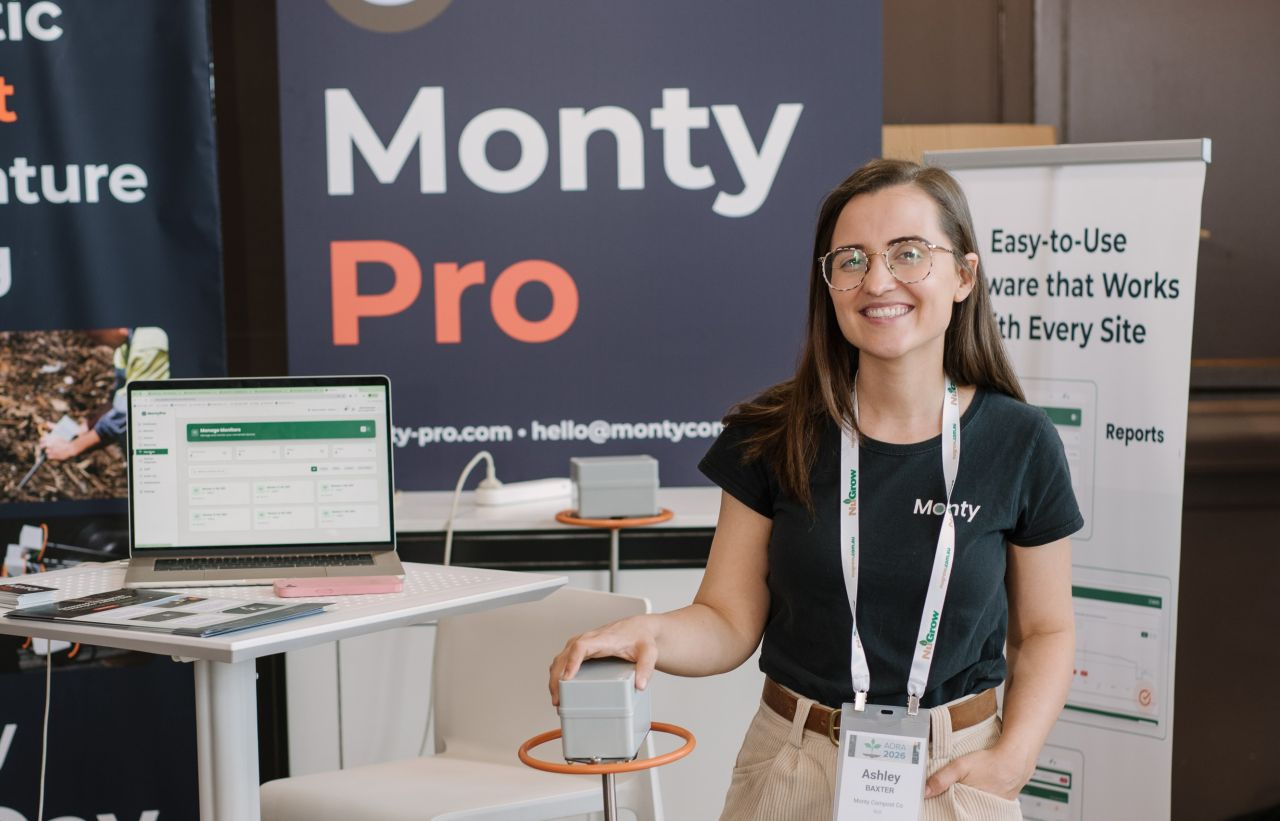
"Australia is so behind and has a massive culture of staying humble. This helps stay lean and build great business fundamentals but when it's time to scale, you need the SF ambition," she says.
Three founders, three companies, one pattern. The first thing that changed was what they believed was possible.
If You Are Ready to Build for the World
The hesitation is familiar. The timing is not quite right, the product is not ready, the US feels like a second-stage problem. Sale had the same instinct, and his advice to a founder in that spot is short: "Don't wait. Do the Antler Embark program or something like it. Just take the trip, experience it, and take the next steps from there."
Banks is just as direct: "If you mean on the fence when it comes to going on Embark, I would say leap. It's worth it. The team are fantastic. The sessions are great, and just being amongst it really inspires you."
He came away with valuable information and the confidence to "give it a crack." His closing line: "You will not regret it."
Baxter doesn’t hold back: "You should have booked it already. The US is the most important market to crack bar none. If you don't have it in your roadmap, you will not be a unicorn."
These founders treat the US as a place you have to experience to judge. Kron frames the founder's job the same way: “build for the world, start narrow, and think big.”
Ready to build a global company?
Apply for Antler Fast Track, Antler Australia's rolling pre-seed process. It is a five-week online program with expert 1:1 working sessions, and Antler says you get a decision within five weeks of entering. Antler invests $260,000 for 12% equity. You will need a full-time co-founding team of two or three, based in Australia with full working rights.
ANTLER RESIDENCY —LAUNCH YOUR STARTUP
Antler backs exceptional founders to go further, faster.