.png)
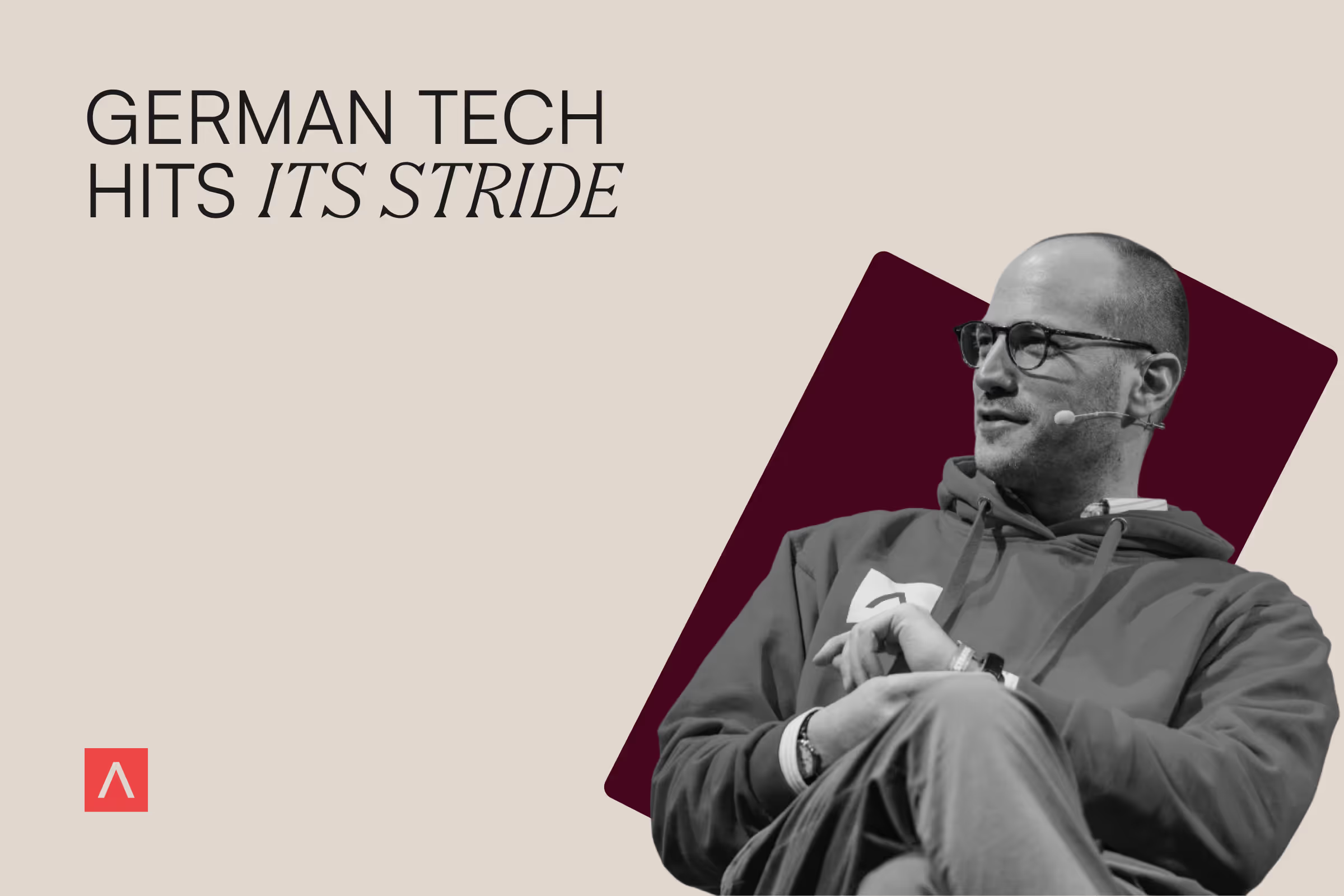


The state of the European and German economy, and its tech ecosystem, is far from perfect. Yet one thing is clear: the current signs are more positive than they have been in a long time.
The world’s five most valuable companies all come from the technology sector and it’s beyond doubt that technology will be the key driver of growth and prosperity in the decades ahead.
For a long time, however, Germany’s tech ecosystem struggled to compete internationally. The common narrative was that building disruptive technology companies in Germany was next to impossible - a mix of regulation, bureaucracy, inertia, and lack of investment supposedly made success unattainable.
But that is changing. A look at the new generation of founders shows that Germany is capable of a great deal.
Across Europe, there are already 16 tech companies founded since 2020 that have achieved unicorn status - valuations of over one billion US dollars. A third of them are based in Germany. On average, Europe’s most successful companies have taken seven years to reach unicorn status. These new German unicorns have done it in under two years.
Despite headlines about a stagnant economy, German tech companies are now being founded and scaled at a pace that can compete internationally.
The movement, however, goes far beyond the headline-grabbing unicorns. Data from KfW shows that German startups raised around €4 billion in the first half of 2025. In the second quarter alone, investment volume was 45% higher than the previous quarter.
Two key factors are driving this acceleration.
The first is the widespread adoption of artificial intelligence. Germany used to produce mainly fintech and e-commerce unicorns. Since 2020, two-thirds of new unicorns have come from AI. They are shaping the most important technological developments of our time and growing faster than anything we’ve seen before. And even startups that don’t build AI products themselves are benefiting - by using AI to create better software, with fewer resources, in less time, while automating and streamlining their operations.
The second factor is a shift in mindset among successful founders. Working closely with founders from the very beginning of their journeys, I’m seeing a new level of determination this year.
In fact, in a survey of 1,200 European founders, we found that German founders work the hardest in Europe: 94% work more than 60 hours per week, and 38% more than 80 hours.
And they want to do even more. 80% of founders said they want to execute even faster. For the first time, increasing execution speed (44%) was cited as a bigger challenge than access to capital (40%).
This work ethic is exactly what’s needed in the AI era, where speed is everything and the smartest, most ambitious minds worldwide are competing for the same users. That’s why many founders are still in the office long past midnight, working weekends as well. It’s a tough and often unforgiving reality, but in global competition, we can only win if we’re willing to move at the same pace as everyone else.
And the results are already visible, even at the earliest stages. The latest generation of tech companies is reaching first revenues three times faster and earning five to ten times more in their first year than those founded just three years ago.
A perfect example is Peec AI, whose launch in Berlin earlier this year we had the pleasure of supporting. Peec AI helps companies improve their visibility and positioning on AI-powered search engines. It has raised millions from international investors and achieved more than $3 million in annual revenue just months after launch, with strong upward momentum.
That makes one thing clear: major success is absolutely possible. The challenge now is to sustain and build on this momentum. The ecosystem must stand on broader institutional foundations, maintain its high speed, simplify regulation, and continually increase its openness to talent from around the world.
We must also stay open to change - because the most important industries of the past hundred years are unlikely to be those of the next hundred. With determination and openness, Germany can secure its place as one of the best places in the world to start a company.
-
This articles was initially published in Handelsblatt
ANTLER RESIDENCY —LAUNCH YOUR STARTUP
Antler backs exceptional founders to go further, faster.